Pablo de Azcárate
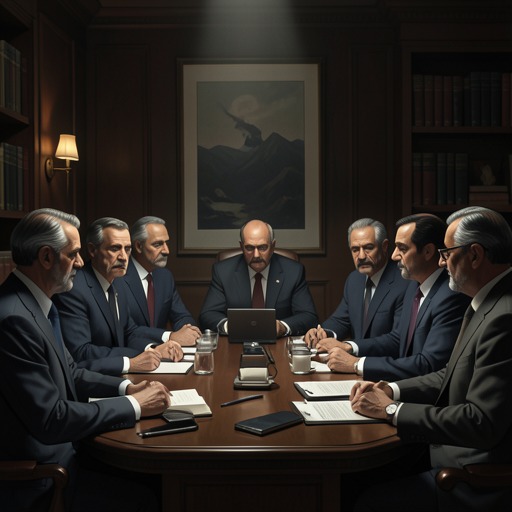
Los pacientes del doctor GarcíaPablo de Azcárate is the diplomat and political intermediary who shapes Manuel Arroyo Benítez’s career across two very different eras: first as the patron who prepares him for international service, and later as the contact who brings him into clandestine work against the network sheltering Nazi fugitives in Spain. His influence rests less on formal authority than on continuity of trust: decades after directing Manuel toward Geneva, he can still summon him, offer him work, and set a dangerous mission in motion.
Identity and Early Influence
In 1922, Manuel met two young men who would become fundamental to his life. The evidence identifies Pablo de Azcárate as one of them, the thinner and balder of the pair. The first encounter is recalled through Manuel’s embarrassment: his best shirt had holes in its collar, so he borrowed an oversized one from Hermene, and his shoes were split at the sides. He tried to hide behind his fellow scholarship students, but the school director made him step forward and shake hands with the visiting men. The scene places Azcárate at the threshold of Manuel’s passage from poverty and provincial life into an education and career that would take him abroad.
Azcárate’s patronage was practical and sustained. Through the Azcárate family’s long connection to the school at Villablino, Manuel found support after leaving León for Madrid. A government scholarship enabled him to complete his studies quickly, while the family provided protection from his first day in the capital. By September 1931, Azcárate had helped direct Manuel toward a post at the League of Nations. Manuel had prepared for that opportunity by studying international law and learning French and German, while beginning to speak English. The demands of this preparation left little room for Madrid’s social life: he rarely went out, and the temptation to repeat an evening’s entertainment troubled him more than its hangover.
From Geneva to Wartime Service
The appointment took Manuel away from home at a moment of personal loss. After returning to Robles for his mother’s funeral, he went back to Madrid the next day and left for Geneva forty-eight hours later. He lived in Switzerland for almost six years and continued sending money to his siblings, but did not return to Spain until December 1936, traveling from London. Three months earlier, Azcárate had resigned his League of Nations post to become ambassador of the Spanish Republic in the United Kingdom and had taken his assistant with him. The change in Azcárate’s office thus carried Manuel from international civil service into the Republic’s wartime diplomatic work.
Their association was not only a matter of assignments. In London, Azcárate’s relaxed manner appears in a telephone invitation to come for a weekend meal; he offers to arrange the travel costs if the treasury cannot pay. At another moment, when Manuel faces an immediate obligation, Azcárate tells him to go despite his reluctance, explaining that he must dine with the Hungarians and that, as matters in Madrid worsen, they cannot afford to offend the Americans. The exchange shows the practical pressures surrounding the Republic’s diplomacy and Azcárate’s habit of combining personal familiarity with political calculation.
A Postwar Intelligence Partnership
After the war, Azcárate again becomes a point of access to work. He has retained friends and contacts at the League of Nations and offers Manuel an unofficial position beyond the limited diplomatic representation available to the Republican government in exile. Manuel works alone from a small office rented under the name of a nonexistent commercial agency. His real workplace is the benches, parks, and cafés of Geneva, where he meets representatives of neutral and Allied countries. Under the assumed name Felipe Ballesteros Sánchez, he reports the results to Taplow, sending his summaries whenever he can find space aboard a British military aircraft.
The task Azcárate later proposes is more dangerous and more consequential. He explains that Manuel has been connected to the project from its beginning, but that it is not merely a delicate assignment: it is dangerous. The object is to investigate Clara Stauffer’s organization, which Meg Williams and Congressman Sal Burnstein have begun to identify as a functioning escape network. Burnstein has spent months looking for evidence of an established Nazi escape organization without finding solid proof. The information available about Stauffer’s network is not yet sufficient to present to the United Nations or to pressure the United States government, but exposing Franco’s regime as a protector of war criminals responsible for the Holocaust could have a political effect.
Azcárate lays out the suspected route and the limits of what can be claimed. The investigators believe that fugitives welcomed and supplied with Spanish papers by Stauffer are ultimately bound for South America, especially Argentina. They suspect cooperation with the Perón government, which is also sending Spain grain and frozen meat despite the blockade. Stauffer’s access to Spanish documentation is said to rest on birth certificates supplied by friendly parish priests and contacts within the state administration. But these remain suspicions, not proof: the American intelligence service, Burnstein, and Meg share the Argentine lead, yet the investigators still need evidence strong enough to establish the route. Azcárate does not disguise the recklessness of the proposal; he observes that a sensible, intelligent person would tell them to go to hell.
Competing Mandates and Trust
The mission depends on a divided chain of authority. Meg is to arrive in Madrid and work with Manuel; her intelligence contacts will provide him with an American passport. The CIA has approved his assignment, officially limited to gathering information on Nazis living in Spain and the organization protecting them. Its superiors are not to know that Manuel also works for Azcárate or that the Republican side intends to place him inside the Stauffer network. Azcárate’s expectations therefore exceed the official American mandate. Manuel is asked to serve overlapping purposes without revealing one employer to the other, a structure that makes trust both the mission’s instrument and its risk.
The scheme also relies on Azcárate’s ability to connect people who cannot readily meet under their own names. In a later call, Manuel reaches him from a luxury hotel where he has registered under a false identity, wary that British intelligence might monitor a diplomat involved in the Arab-Israeli conflict. The operator’s voice overlaps with a woman speaking Spanish from Buenos Aires; Manuel recognizes her but does not greet her, asking in English for Don Pablo. Azcárate likewise avoids using Manuel’s name. Even their conversation is shaped by the need to keep identities and connections obscured.
When Manuel seeks help with a personal correspondence, Azcárate offers to identify women who might be interested and asks whether Manuel can wait for a letter or would rather write first. Their exchange ends with Azcárate wishing him well and promising to follow the progress of the courtship. The episode reveals a more intimate register in their relationship: Azcárate is not only an employer or political sponsor but someone to whom Manuel can bring a private uncertainty. Yet the correspondence itself belongs to the same world of assumed identities as the intelligence work. Manuel’s friend Peter Louzán writes in English to Helen Murray, presenting the false Rafael Cuesta as a shy Spaniard who fell for her during an excursion to Toledo; Helen agrees to correspond. Manuel later uses the letters to manage what information reaches the Americans, seeking to coordinate his report on the Stauffer network with the information Guillermo sends to Burnham.
Continuing Connection and Narrative Role
By the late 1940s, the relationship has endured despite long stretches without direct contact. Since returning to Madrid, Manuel has had no direct communication with the man for whom he has worked since before the Spanish Civil War. Meg keeps him informed about Azcárate’s professional career: in May 1948, the United Nations appoints him deputy secretary-general of the Palestine Commission, shortly before war breaks out between Arabs and Israelis, and later responsibilities keep him in the Middle East more than at home. Manuel nevertheless hopes that Azcárate will extend his Christmas leave. Their connection persists through intermediaries and news, rather than through regular meetings.
Azcárate’s importance to the narrative lies in this ability to bridge institutions and periods. He first helps a scholarship student become an international-law specialist prepared for Geneva; during the war, he carries that assistant into the Republic’s London mission; after the Republic’s defeat, he finds him unofficial work and recruits him into an investigation that joins Republican exile politics to American intelligence and the pursuit of Nazi escape routes. The continuity is personal, but the stakes repeatedly widen beyond the two men: private loyalty becomes the channel through which a politically isolated cause tries to turn uncertain intelligence into public evidence.